Tartiflette Gratin
A French cheese-and-potato side just perfect for the holidays

JUMP TO THE RECIPE | PULE PARA A RECEITA
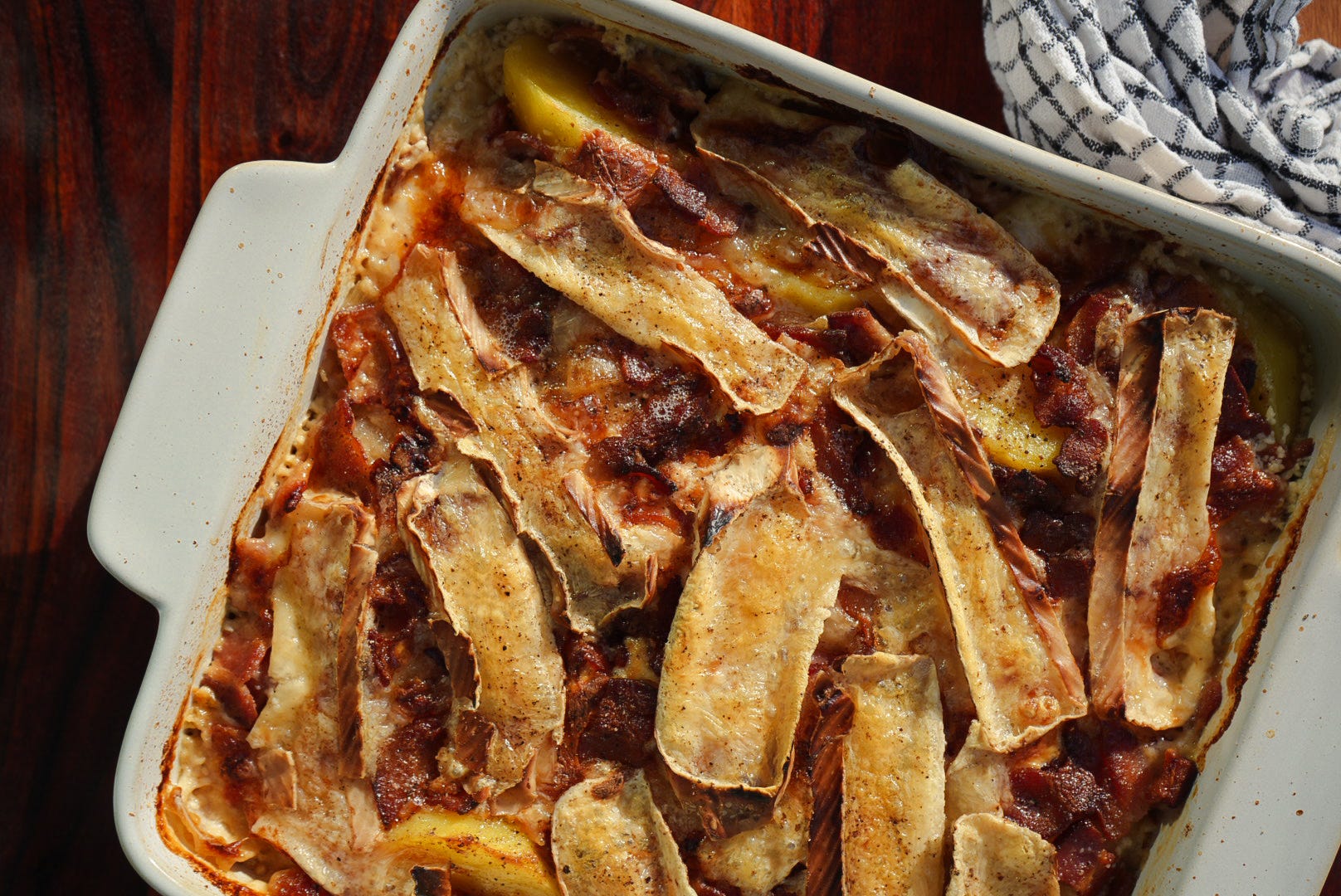
Potatoes, bacon, and a soft, washed-rind cheese (classically Reblochon, though you know I’m not particularly reverent about tradition) melt together until there’s no clear line between cheesy sauce and structure. It’s an impossibly hearty dish and leaves little room for ambition elsewhere on your plate. Traditionally, Tartiflette is a complete meal.
But during the holidays, I think Tartiflette is far more interesting as a side dish.
In the form of this spoonable gratin, it seats comfidently at table and absorbs attention without demanding it (unlike some of my guests). A spoonful alongside roast turkey, ham, or even a scattering of steamed peas would read as comfort rather than excess. Not that I ever worry much about excess. Or, as Anthony Bourdain once put it, “You can never have too much cheese, bacon, or starch.”
I’ve been making Tartiflette for years, in gratin version or not, including during Christmases spent in my hot, humid Amazonian home. Brazilian holiday tables are so rich: roasts next to salads, sweets beside savory dishes, everything sharing the same space. Of course, an Alpine dish like this never felt out of place at our table, in case you are wondering.
This dish will always get a reaction. You bet, at some point, someone will interrupt the table just to acknowledge the cheese. And it stretches conversations longer than planned, I must warn you. But that quality is exactly what makes Tartiflette so effective. To me, it has always read as a French classic, like so many others, designed to be irresistible.
A few things that matter when treating Tartiflette as a gratin:
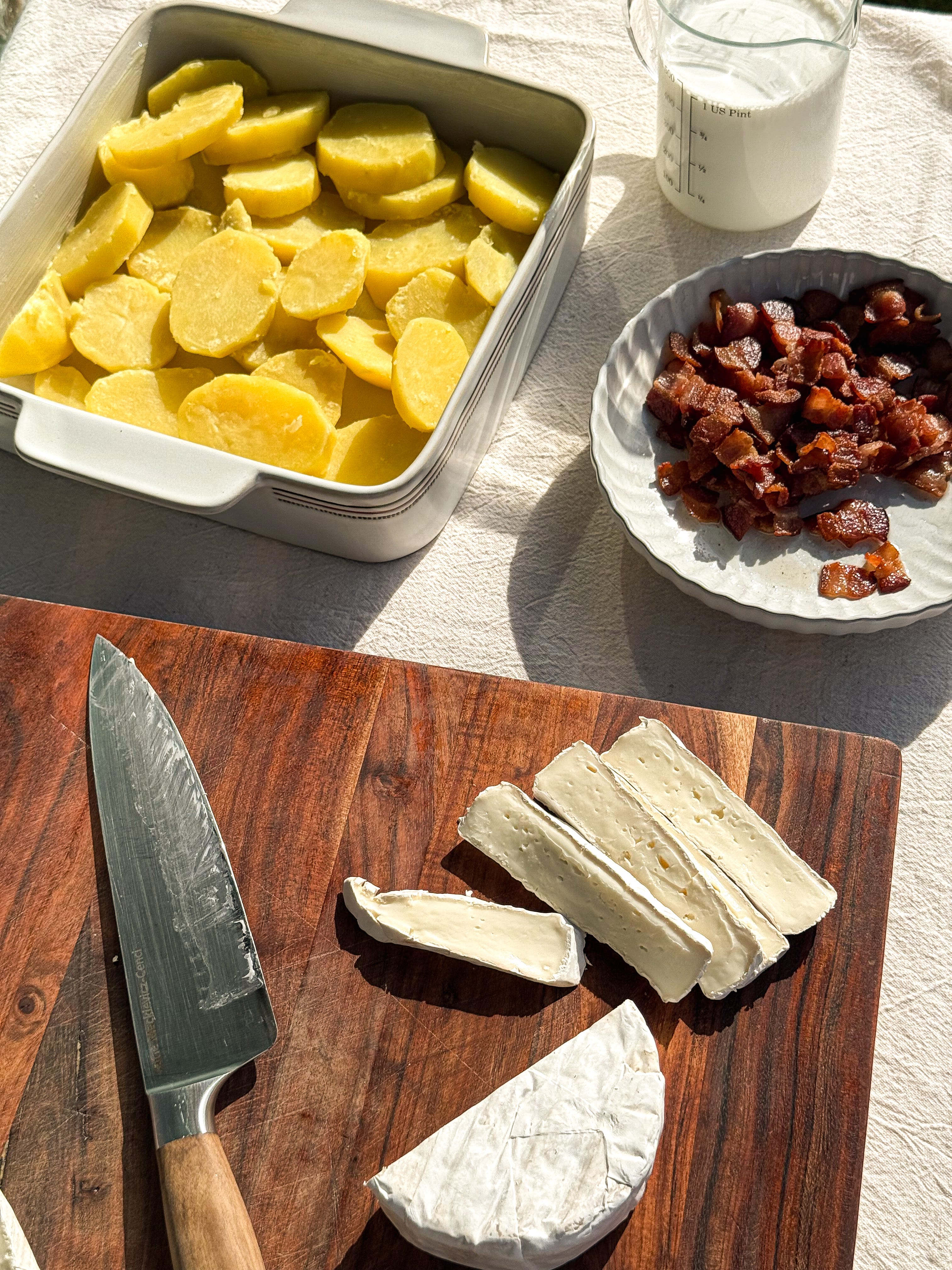
Potatoes: Waxy potatoes are non-negotiable. The goal is a gratin that holds its shape, not mashed potatoes. I parboil the potatoes until just tender, then let the oven finish the job.
Onions and bacon: Onions should be cooked until soft and sweet. Bacon should be deeply golden. Some prefer it softer; I like a bit of crunch and color.
Liquid | Dairy: Purists will tell you the cheese makes its own sauce, and they’re not wrong. But that approach makes sense when the dish is meant to stand on its own. For this version, I aimed for a spoonable gratin. So my biggest departure from tradition here is the use of dairy. That’s why I use white wine plus half-and-half and crema. The wine keeps the dish lively (you need that acidity!), while the dairy creates a gentle, creamy base that binds the potatoes without drowning them. The result isn’t a loose, molten cheese situation, and it’s not a dauphinoise either. It’s a structured, creamy side dish that holds together, bakes evenly, and most importantly, reheats like a dream!
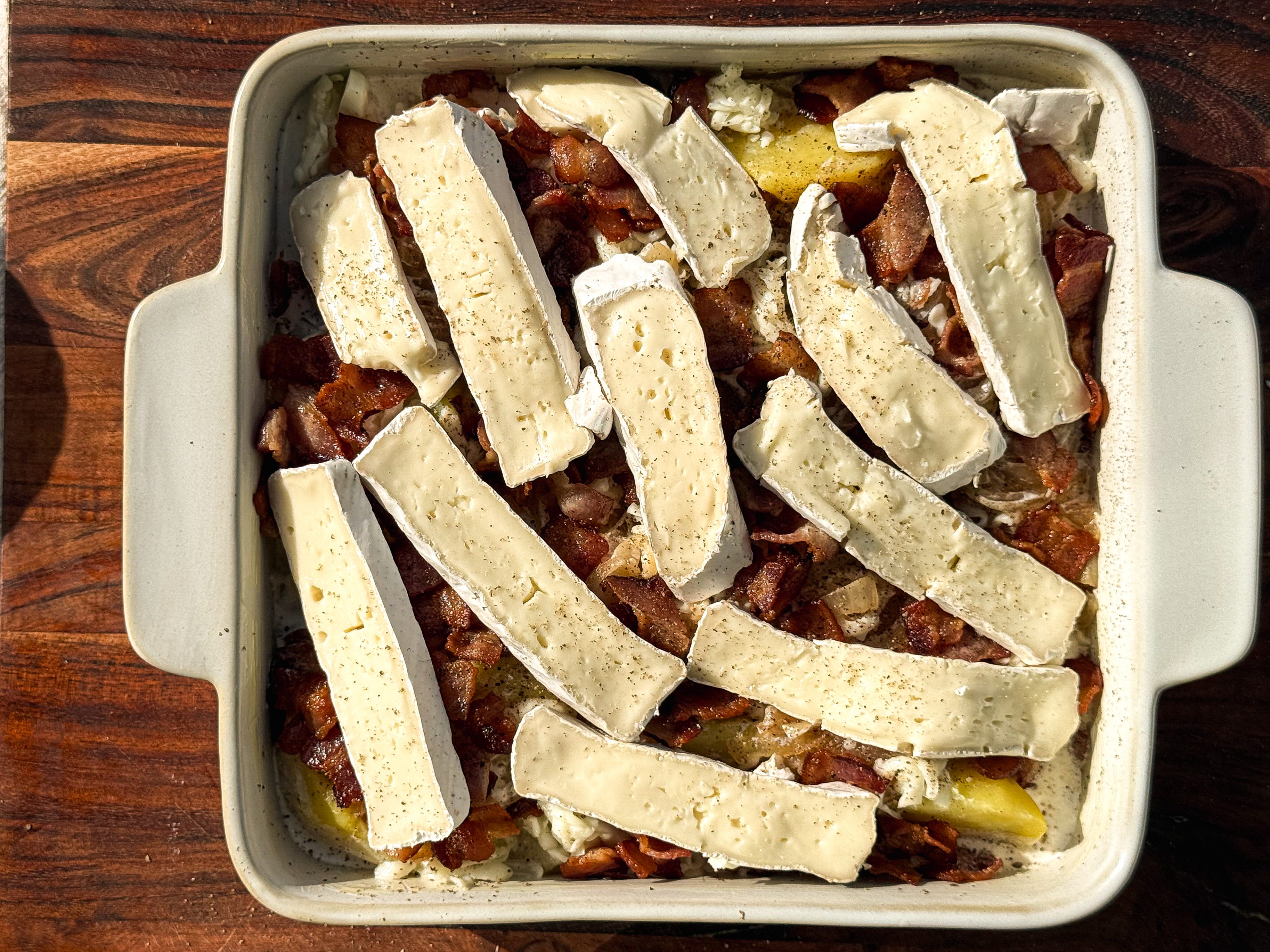
Cheese: Reblochon remains the reference point, but the category matters more than the name. So soft or semi-soft cow’s milk cheese that melts generously is what you’re after. In my Real California Milk version, I use an excelent local Brie, along with a small amount of mozzarella for structure. The essential point is that I layer the cheese through the dish, not just on top, so every bite gets the payoff.
The rind stays, obviously.
Tartiflette is rich, and it benefits from a bit of contrast. If you want to make it for another occasion, I suggest serving it with something sharp and green, if you can. Bitter leaves, a mustardy vinaigrette, pickles. A crisp white wine doesn’t hurt either.

This recipe is sponsored by Real California Milk, and I’m so proud to share it with you. As always, all opinions and ideas are entirely my own.
When you see the Real California Milk seal, you’re getting delicious, wholesome dairy and also supporting local Golden State farms and the families behind them. These are the people caring for the cows, the land, and the future of sustainable farming: Look for the seal on butter, yogurt, cream, ice cream, cheese, sour cream, crème fraîche... all the good stuff.


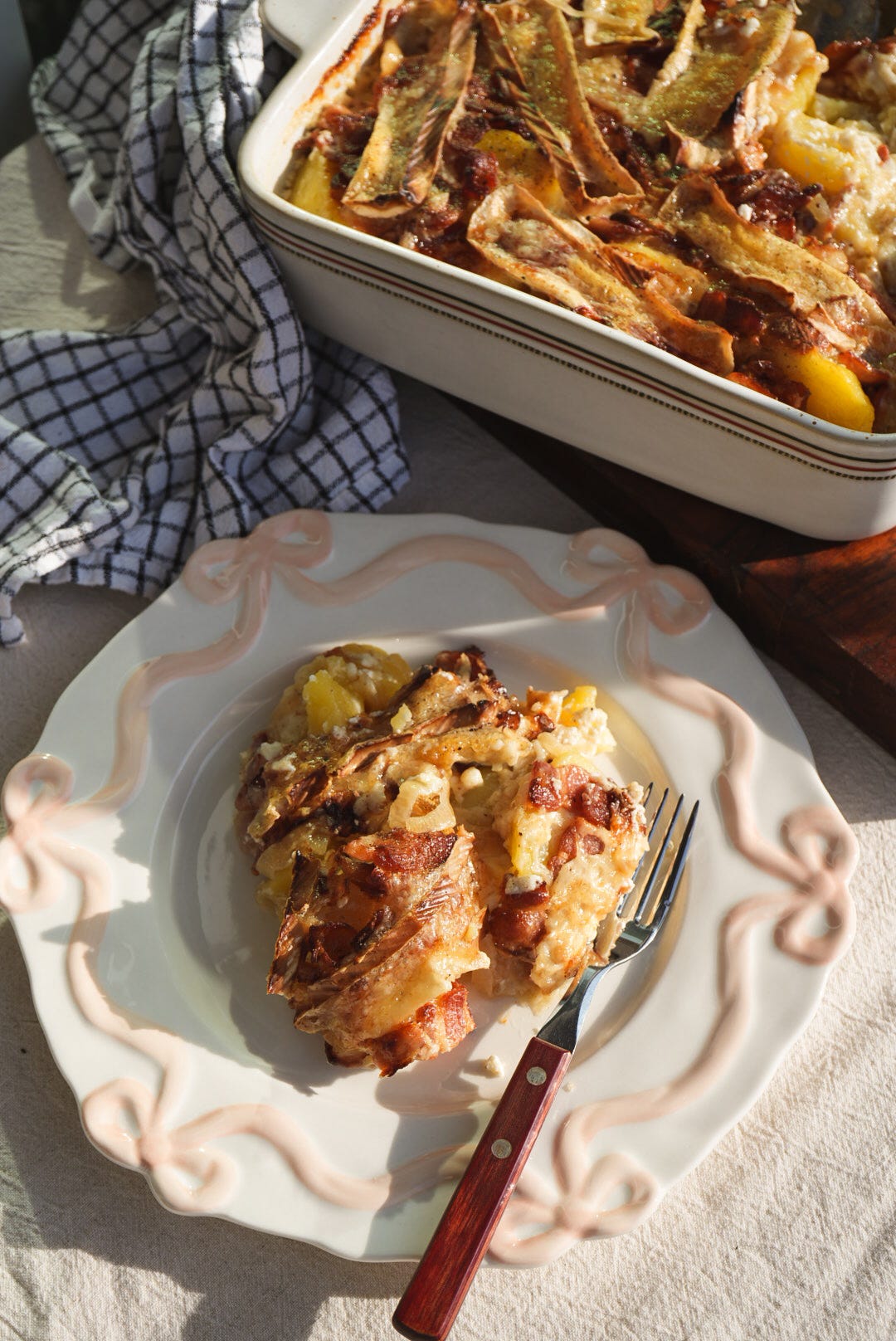
Tartiflette Gratin
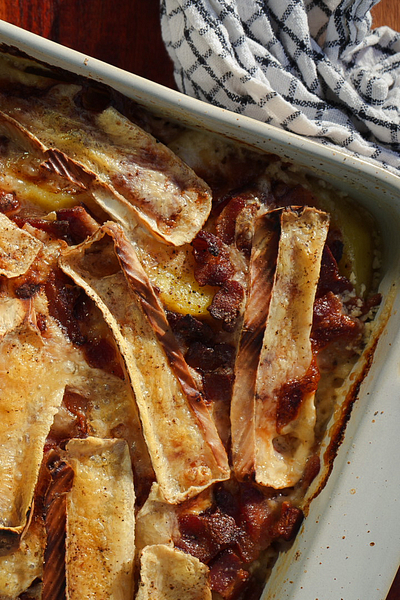
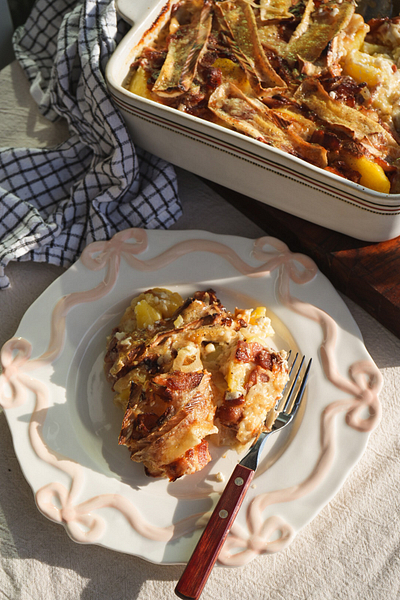

Makes 4-6 servings
2 tablespoons Real California Milk Salted Butter
2 ½ pounds (1.1 kg) Yukon Gold potatoes, peeled (or another waxy potato)
Salt
12 ounces (340 g | about 2 cups chopped) thick-cut bacon, cut crosswise
1 large sweet onion, sliced (about 1 ½ cups | 220 g)
½ cup (120 ml | 4 fl oz) dry white wine or dry vermouth
freshly ground black pepper
1 cup (240 ml | 8 fl oz | about 240 g) Real California Milk Half and Half Cream
1 cup (240 ml | 8 fl oz | about 230 g) Real California Crema Mexicana or Sour Cream
1 cup (115 g | 4 oz) Real California Milk Mozzarella Cheese, grated
1 pound (450 g | about 3 cups sliced) Real California Milk Brie or another semi-soft cheese, sliced ½–¾ inch thick (1.5–2 cm)

Generously butter a large baking dish or gratin (ideally 2 quarts) and set it aside.
Peel and slice the potatoes into ½–¾ inch (1.5–2 cm) rounds. Place them in a large pot and cover with cold water plus 2 tablespoons of salt. Set over medium-high heat and bring to a gentle boil. Cook until a paring knife slides in easily, about 12–15 minutes. The potatoes should be tender but not falling apart. Drain and let cool slightly, just until warm.
While the potatoes cook, place the bacon in a skillet over medium heat. Let it slowly render its fat, stirring occasionally, until the pieces are deeply golden. If the bacon is lean, add a small splash of olive oil to help it along. Transfer the bacon to a plate lined with paper towels.
Remove about half of the bacon fat from the pan. Add the sliced onion, a pinch of salt, and cook over medium heat until completely soft and glossy, about 8 minutes. Pour in the white wine or vermouth and let it bubble briefly, scraping up any browned bits from the bottom of the pan to form a light sauce. Set aside.
Preheat the oven to 400°F (220°C).
In a bowl, whisk together the half and half and crema. Taste and adjust with a pinch of salt and freshly ground black pepper. Set aside.
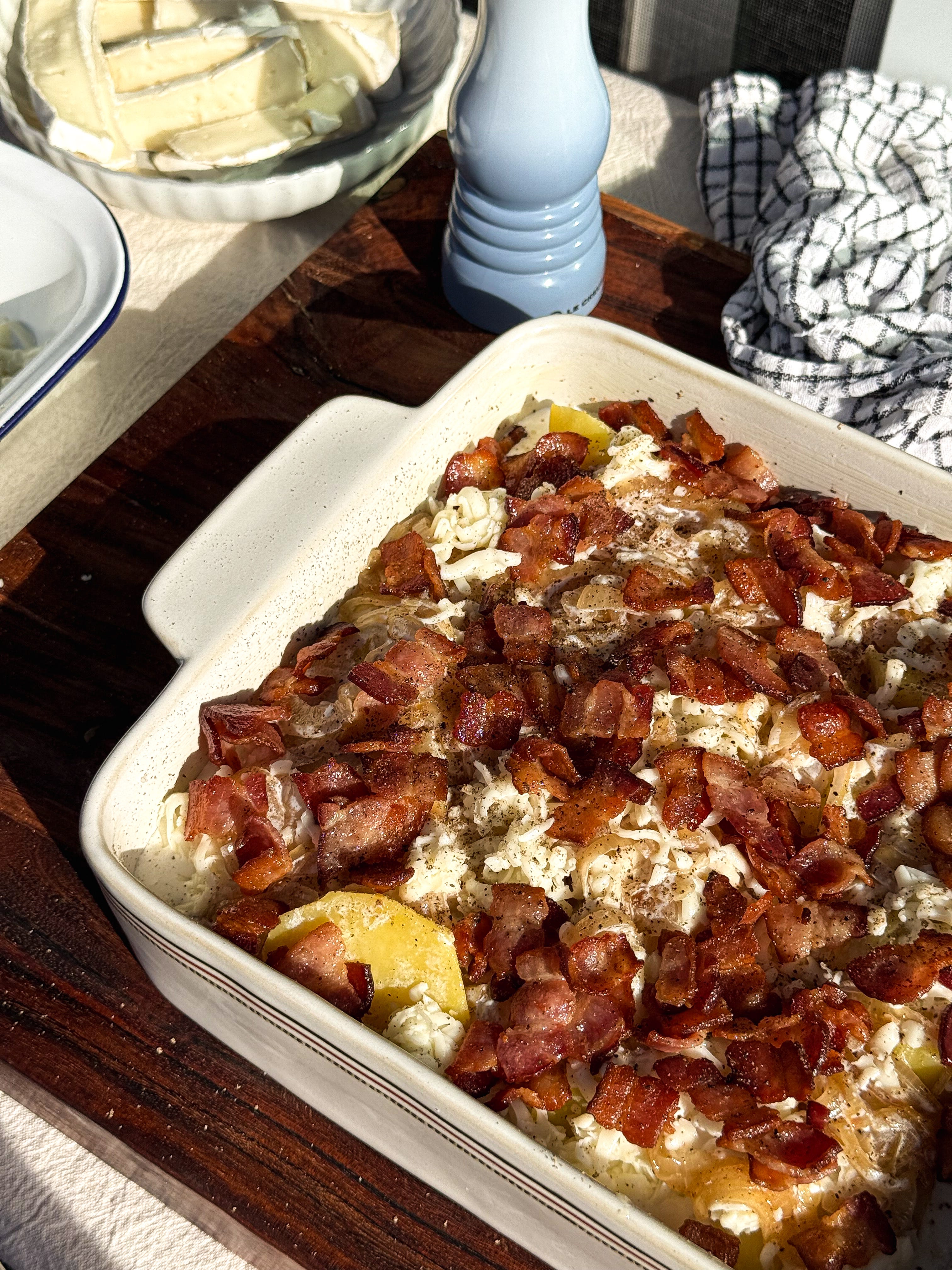
Arrange half of the potatoes in an even layer in the buttered dish. Sprinkle evenly with the grated mozzarella and spoon over half of the onion mixture. Repeat with the remaining potatoes, a generous crack of black pepper, and the rest of the onions.
Pour the half-and-half and sour cream mixture evenly over the dish, letting it trickle down between the layers. Scatter the bacon over the top, then arrange the Brie slices in a single generous layer to cover the surface.
Place the dish on the middle rack of the oven and bake until the cheese is melted, bubbling, and lightly browned at the edges, about 30–40 minutes. Let rest for 5–10 minutes before serving.